
SNOW AND ICE LIABILITY RISKS
PROBLEM: An owner sent the board a letter complaining about the association’s snow-removal contractor. He says the contractor waits too long before beginning to plow and doesn’t do an adequate job of clearing the snow and treating the ice. The letter says the owner is putting the board on notice that if anyone slips and falls, the association will be sued for negligence. This is the only complaint about snow removal the board has received. How should we respond?

SOLUTION: A timely question, given the amount of snow we’ve had and continue to have in New England this winter. You shouldn’t immediately fire your contractor, but you shouldn’t ignore the complaint either.
As a first step, you should assess the contractor’s performance after a snow event, which you should be doing anyway. Do you see any cause for the owner’s concern? Does the contractor comply with the terms of your contract, which should specify: The expected response time, how much snowfall requires removal, the equipment and de-icing materials to be used, the areas to be plowed and where the snow will be deposited, among other details.
Even if the contractor does everything the contract requires, a resident or visitor who slips and falls might still sue the association for negligence. If so, a court will consider not just whether the contractor has done what the contract requires, but whether the association’s requirements were reasonable – that is, would they reasonably be expected to reduce the risk of slip and fall injuries.
Reasonableness, like beauty, is in the eye of the beholder – it is subjective. It is also a legal standard for determining negligence established by the Massachusetts Supreme Judicial Court (SJC) in a 2010 decision (Papadopoulos v. Target Corporation). Neither that decision nor the many that have followed it have specified what snow-clearing measures would be deemed “reasonable.” But they have provided enough guidance to suggest that common sense and an adherence to “best practices” are probably your best guides.
Courts considering negligence claims will consider whether the association’s response was reasonable given the circumstances, recognizing that different conditions will require a different response. If the snowfall ends at noon, waiting until the next day before beginning to plow probably would not be deemed reasonable; waiting for a blizzard to subside probably would be.
If a heavy snowfall is expected to begin after midnight on a weekday, having a snow removal crew ready to respond before people leave for work in the morning would be reasonable. Waiting until the day before this storm before trying to find a snow removal company, on the other hand, would likely put the association on the wrong side of a negligence claim.
Courts will consider not just what the association did or didn’t do, but what it knew or reasonably should have known. If an owner slips in an isolated and rarely utilized area that has never been plowed in the past, the association will have a strong argument – not necessarily a winning one, but a strong one – that there was no reasonable expectation that the area would be plowed this time. But if five people have complained about an icy area in the parking lot and the board hasn’t responded, the resident who slips and falls in that area will have a good chance of winning a negligence claim.
There are no actions the board can take, no prayers it can recite, that will prevent the association from being sued. But there are some measures that will reduce its liability risks.
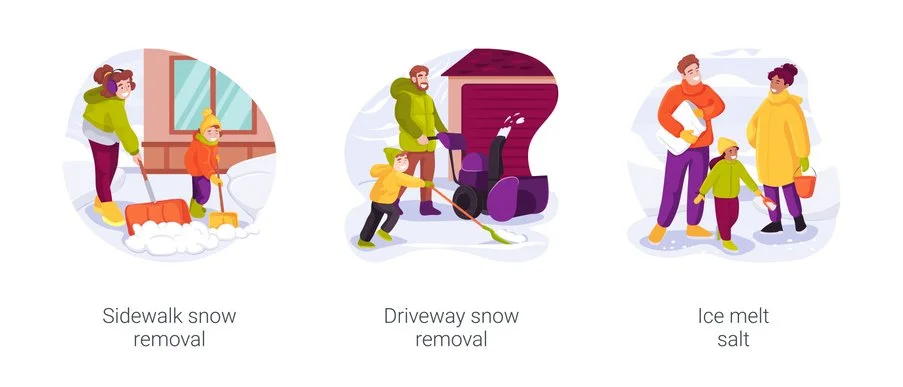
Adopt a snow resolution
Delineate clearly where the association’s snow removal responsibilities begin and end. The association is clearly responsible for common areas, but the responsibility for limited common areas – balconies, decks, patios and sometimes walkways and stairways that are used exclusively by individual owners -- isn’t always clear. A snow resolution, which boards typically have the authority to enact without owner approval, can specify that the owners who use these areas are responsible for clearing snow and ice from them.
Snow resolutions won’t completely eliminate liability risks, and they won’t prevent owners who are injured themselves or who are sued by others from suing the association. But they will make it more difficult for plaintiffs to win a negligence claim against the association when the board can demonstrate that the owners themselves were negligent.
Keep a log describing the association’s response to a snow event.
The log should note the contractors you called (or the response time required under an existing contract) and when the contractor arrived. You should also require contractors to maintain their own logs noting when they provided service to your community, how many times the snow plows went through, how much sand or salt and de-icing chemicals they applied and where they applied it. There is no such thing as too much detail when you are trying to demonstrate that the measures taken by the association and its contractor were “reasonable.”
Keep a separate log recording all complaints about snow removal or post-snow ground conditions and how the board responded to them.
This log can help you rebut allegations that you knew or should have known about a slip-and-fall hazard.
Adopt a rule requiring owners to park their cars in areas that won’t impede snow-clearing efforts. Enforce the rule consistently and document the enforcement efforts.
Require the snow removal contractor to indemnify the association for damages resulting from anything the contractor does or fails to do. Ideally, the indemnification should also cover the attorneys’ fees and legal costs the association incurs in a law suit.
Require the snow removal contractor to have “adequate” commercial general liability insurance.” The experts suggest a minimum of $1 million to $2 million, plus an umbrella policy providing additional protection above that. The board should also insist that the contractor’s policy name the association as an “additional insured.” This would allow the board to file a claim directly against the contractor’s insurance policy, possibly avoiding a claim against the association’s master policy.
Monitor the contractor’s work to make sure snow removal crews are doing what they are required to do. Also, inspect walkways and roadways to identify unsafe conditions, respond to them and document your response. As long as ‘reasonable care’ remains a subjective standard, associations should try to make sure their efforts are more than reasonable.
If you have any questions or concerns regarding snow and ice liability or other liability risks, please contact William Thompson.