
SWIMMING POOLS
PROBLEM: The local Board of Health determined that the association’s heat pump must be replaced before the pool can be opened for the season.
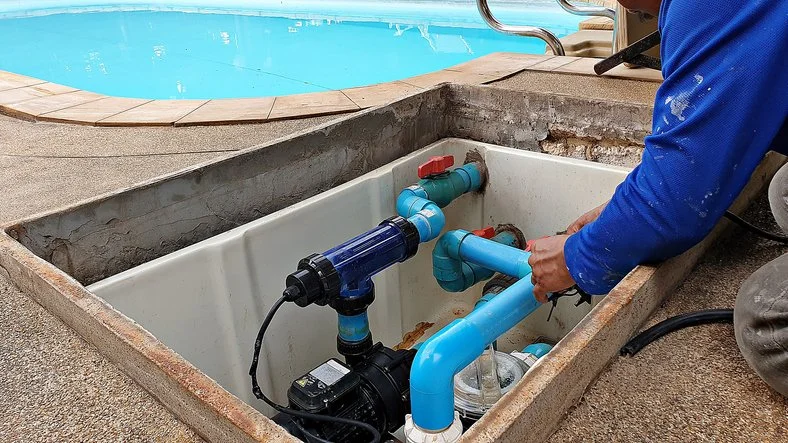
SOLUTION: The association will have to replace that pump, but perhaps not right away.
The board of health or the building department must inspect association swimming pools annually to verify that they comply with health and safety requirements. The permit must be renewed every year. Pools that do not pass the inspection are not allowed to open until they do, but local officials may issue a ‘variance’ allowing a noncompliant pool to open if:
The required fix would create a ‘manifest injustice’ for the association, and
The applicant has proven that the same degree of protection the code requires can be achieved without strict application of a particular provision.
Municipalities do not grant variances easily and a variance, once granted, is not permanent. One of my clients received a variance for a complicated pool repair that would have been difficult for the small association to manage on top of a major capital project under way at the time. The Board of Health extended the variance twice but refused to extend it a third time, concluding that the association had sufficient time to figure out how to finance the pool repair.
It is obviously better to discover that you have a pool problem before the pool is scheduled to open. You do not want residents arriving for opening day to see a sign announcing, “Pool closed for repairs.” So, you want to schedule the inspection well in advance. You also want to conduct your own inspection to identify and address any issues before the inspector flags them.
The health and safety standards for “semi-public” swimming pools (condo association pools are in that category) are outlined in a 22-page section of the state Sanitary Code,105 CMR 435:00. Among other requirements, pools must:
Be managed by a “certified pool operator” who has completed a training course in the “safe and effective operational maintenance’ of pools;
Be enclosed by a fence. (Fences constructed before Oct. 2, 1975, must be at least four feet high; fences constructed after that date must be six feet high and have a self-latching gate);
Be equipped with safety tools; and
Be tested multiple times daily for water quality and at least weekly for chemical balance.
The certified pool operator requirement is particularly important. This individual is responsible for ensuring that the pool complies with municipal and state health and safety requirements and that it is also is well operated and properly maintained. A volunteer board member probably will not be qualified for the job. You want a professional pool manager who is experienced and insured. When hiring a certified pool operator, you want to start the process in the early spring to leave time to negotiate and sign a contract. As with any contract, you should have your association’s counsel review it.
Associations with swimming pools face a variety of operational and management challenges. I am going to cover just a few more.

Lifeguards
Although the Sanitary Code does not require lifeguards for condominium pools, some municipalities require them for larger pools and some insurance companies may require them as well. Required or not, if you have a swimming pool, you may want to have a lifeguard (or lifeguards) for it, if not all the time, then at least during peak hours when the pool is crowded and safety risks increase.
Because it can be difficult to find and retain qualified lifeguards, the board may want to ask its pool management company to provide and supervise them. However, while the board can delegate the hiring responsibility, it cannot delegate the association’s liability risks. If someone is injured because of what the lifeguards do or fail to do, the association may still be liable for any damages. So, a board member or the association manager should monitor the performance of both the pool manager and the lifeguards to ensure that they are doing what they are required to do.
Boards that hire lifeguards directly must make sure they are properly certified in lifeguard training, first aid and CPR. Also remember that these seasonal employes are subject to minimum wage and overtime requirements.
The Sanitary Code requires communities that do not have lifeguards to post signs with this language:
“WARNING: NO LIFEGUARD ON DUTY”; “CHILDREN UNDER AGE 16 SHOULD NOT USE SWIMMING POOL WITHOUT AN ADULT IN ATTENDANCE”; and “ADULTS SHOULD NOT SWIM ALONE.”
This is not, as some association boards would like to believe, a loophole allowing them to skirt Fair Housing laws prohibiting them from discriminating against children by imposing more restrictive rules on them than on adults. The ‘no-lifeguard on duty’ sign says, children under the age of 16 ‘should…’, not that they ‘must’, be accompanied by an adult. It is a safety suggestion, not a requirement. Associations cannot require adult supervision as a condition for children using the pool.
One additional point about lifeguards. Whether you hire them directly or through a pool operator, you want to define their responsibilities narrowly to include only ensuring the safety of pool users. Lifeguards aren’t babysitters, responsible for entertaining young children whose parents are dozing in the sun, nor should they be responsible for checking IDs and guest passes. While the lifeguard is arguing about someone’s access to the pool someone swimming in it could drown.

Managing Guests
Some municipalities limit the number of people who can be in a pool, based on its size. Boards can also develop their own rules limiting not just the number of people in the pool, but the number of guests owners can invite to enjoy the amenity. A board member, the association manager or someone hired for the purpose should verify that people using the pool are authorized to do so. You do not want the pool to become so overcrowded with guests that owners paying for it are not able to enjoy it. Owners who violate the maximum guest rules can be fined or in some cases may have their own pool privileges suspended or revoked, provided the Master Deed, or By-Laws provide for this enforcement tool.

Rules and Procedures
In addition to complying with state and municipal regulations, associations should adopt their own rules and procedures governing the operation of their swimming pools. A few suggestions:
Make the association’s pool rules sufficiently comprehensive and detailed to address health, safety, and legal liability concerns, but no more restrictive than necessary.
Make sure your rules are consistent with state and local requirements and with any requirements imposed by the association’s insurance company.
Post the pool rules at several central locations including around the pool area.
Distribute the rules to all residents at the beginning of each swimming season and publish reminders frequently in the association newsletter, on its Web site, on bulletin boards, etc.
Have both your insurance agent and your attorney review your rules.
The board should also review the rules periodically and modify them, as needed, to address new concerns or new state or municipal requirements.
Health and safety are the primary concerns, and your rules and procedures should reflect that emphasis. But they should also allow owners to enjoy the pool. That is why you have it.
If you have questions about association rules or rules enforcement, you can email Pamela Jonah or call her at 781.849.3621 or any MEEB Attorney at law@meeb.com.